Shine bright like a diamond.
So the last time I was in a small aircraft, I went flying with a few Riddle friends. The time before that, I went along with another friend, who was preparing for his commercial checkride. However, those were both small single-engine aircraft. The Colorado aircraft was a Piper Cherokee, and the other a Cessna 172. This semester, I got to experience the Diamond DA-42, Embry-Riddle’s twin-engine training aircraft for multi-engine students.
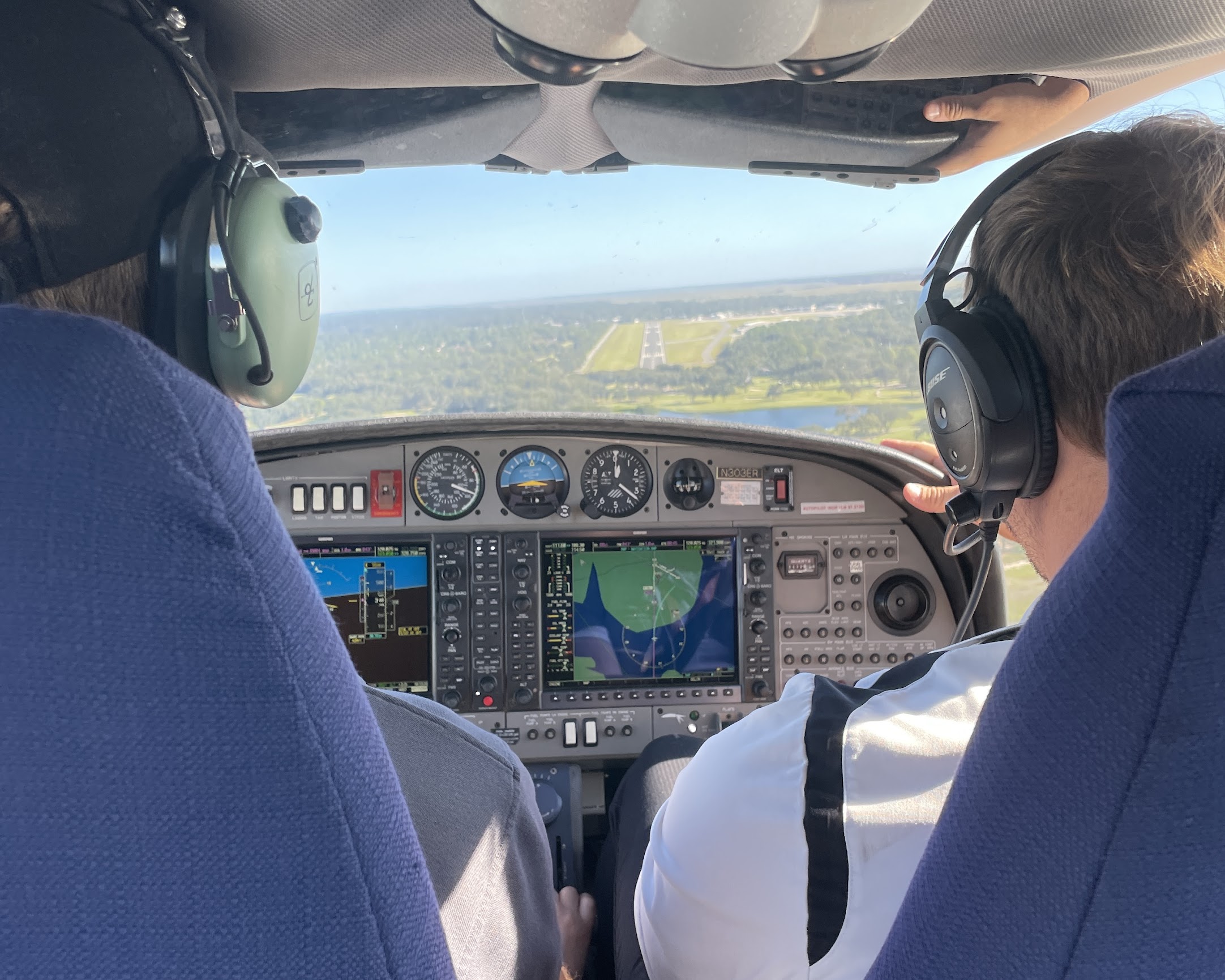
Chris has since passed his checkride, so I convinced him to take me along for a ride. All Embry-Riddle students are eligible to ride in the back seat of the aircraft (commonly referred to as “backseating”). The only condition is that the flight instructor and student must agree. The flight I got to backseat was his cross-country, flying from Daytona Beach (KDAB) to St. Simons Island Airport (KSSI). It was pretty cool- the Diamond moves a lot faster than the Cessnas.
To backseat a flight, first you stop at the dispatch desk with the student you’re accompanying. They’ll sometimes send you up to the flight supervisor’s desk, or sometimes they’ll give you the badge at the dispatch desk. Once you have the badge, you fill out some paperwork while the flight student begins their preflight activities inside. When the student is ready to go to the aircraft, someone from the dispatch desk will escort you to the plane (or you can wait for the flight instructor to escort you).
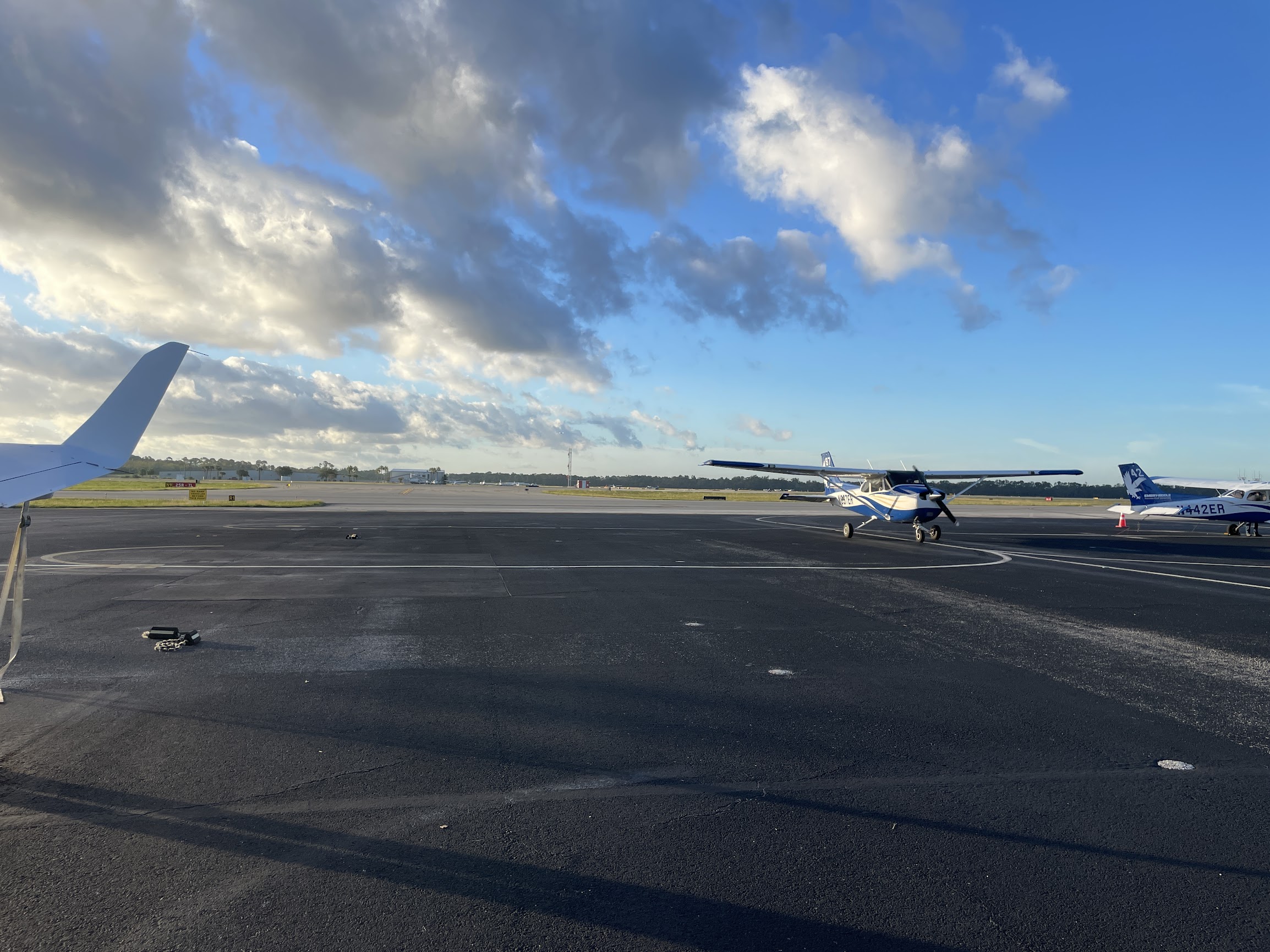
While Chris preflighted the aircraft, I mostly stayed out of the way and looked around. I hadn’t been out on the ramp since last year when a GoJet aircraft visited and students were allowed to tour it. It took about half an hour to preflight the plane, and then we waited for the instructor to come. And that’s when the real activity began.
As one would before any sort of flight, you have to get from point A (the ramp) to point B (the runway) on the ground. To do that, pilots need to gain clearance and instructions from air traffic control. After we got to the runway, the run-up checklist was performed to make sure the aircraft was still doing okay. Since it was, we waited for our takeoff clearance, and then we were off!
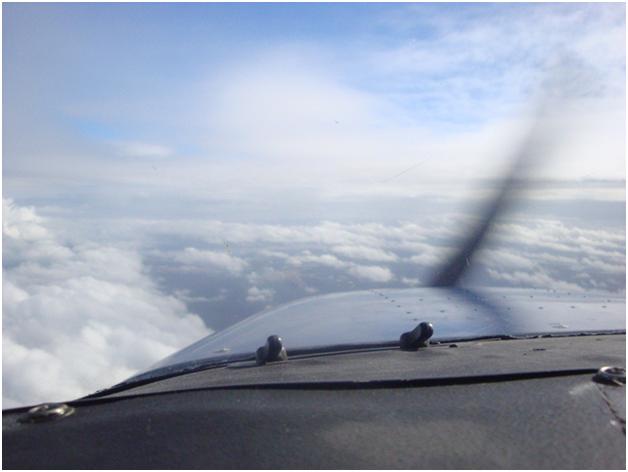
The flight was pretty cool. Chris had filed an IFR (instrument flight rules) flight plan, which meant he could fly through low visibility and clouds. We ended up flying through several clouds, and I can see why instrument ratings are important. Sometimes it was hard to see the wingtip of the aircraft, which was only several feet away.

The flight was around an hour each way, so within the hour we were coming up on St. Simon’s Island. I noticed that there were some heavy crosswinds on the landing, but Chris did just fine. We didn’t come to a full stop- we ended up doing a touch and go before turning around and heading back to Daytona Beach.
The flight on the way back was the opposite on the way to Daytona. We passed through the clouds again, flying back down the coastline. It was pretty cool to see Riddle from the sky- it’s always an amazing sight to see. When standing next to the buildings, they look huge, but from the sky, they look tiny.
After we landed, we headed back to the Riddle ramp. Since people are constantly walking on the ramp, pilots must taxi slowly and be conscious of their surroundings. Once we parked, Chris filled out some paperwork telling the school how long the flight was and where the aircraft was parked, and we walked back into the building.
I was free to go, but flight students do a debrief after each activity (ground instruction, flight simulator, or flight). It’s a way for flight students to discuss how the activity went- what the student did well and what they can improve on. Flight training at ERAU is rigorous, but I can tell that the university wants its students to succeed.
See you in the next blog post… and hopefully at Riddle!
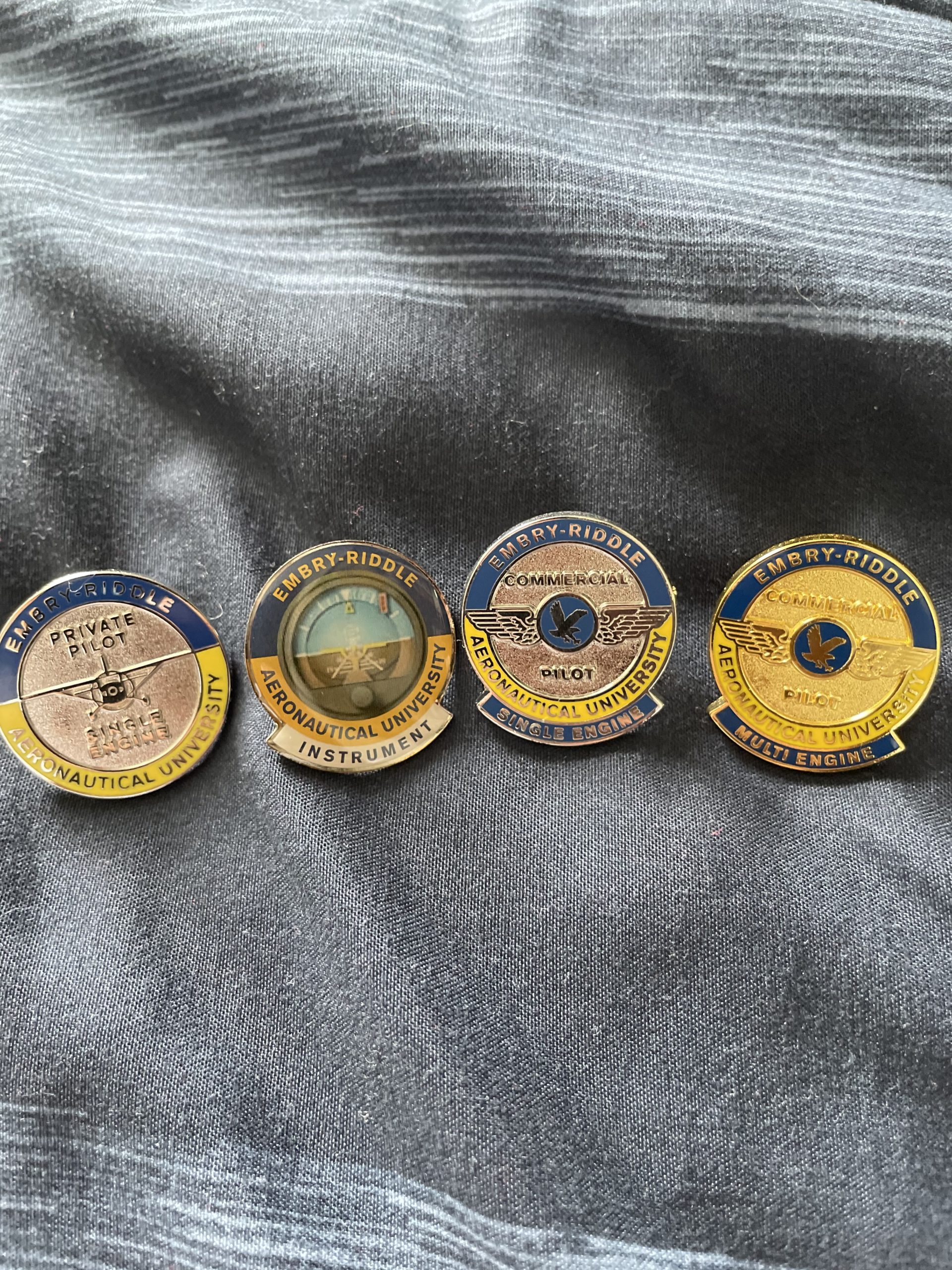
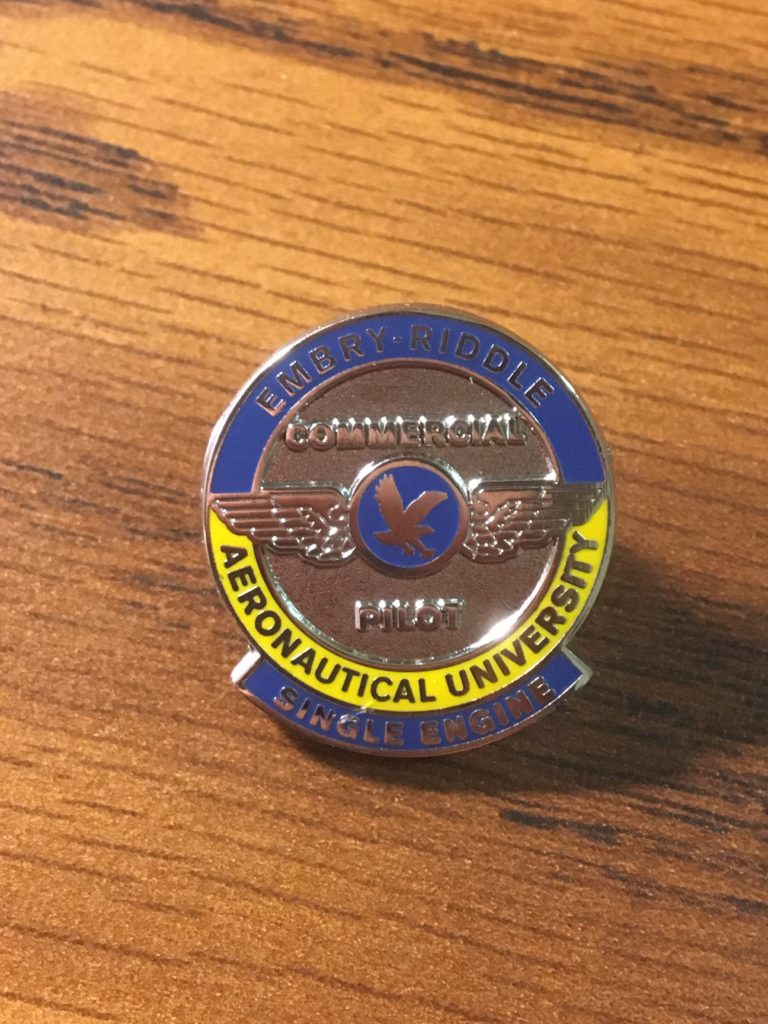
 On the flight training side of education at Embry-Riddle, I came up a little short of my goal of obtaining my pilots license by the end of this semester. All I need is two solo cross countries and then another two or three flights to prepare for my check ride, and then my actual check ride. The weather took a turn south this past week and I wasn’t able to fly at all this week. Hopefully I’ll have my license by the middle of January, and then begin working hard on trying to get my instrument rating by the end of next semester.
 If you have any further questions, feel free to email me at
  I continued my flight training throughout the summer and planned to complete everything by early August. However, I ran into delays due to weather, illness and scheduling. Nevertheless, I completed everything in the Part 141 syllabus, literally two days prior to the move. I was rushing to finish up training in order to arrive at ERAU with my certificate. Because of this, I wasn’t able to fully grasp every topic to the fullest that was required. In the end, I was signed off to take my FAA check-ride, but failed it. As a result, I learned a valuable lesson; flying should be something you enjoy doing and should not be considered at any time a “crash course”. In addition, stress and emotion should be taken into account any time one goes flying. The ‘IM SAFE’ checklist is a good way to determine if you are fit for flight:
 We had packed the cars the night before, so on moving day I only had to pack final items, such as toiletries, alarm clocks, etc. During our travel to Daytona Beach, my family and I took the Auto-Train from Lorton, VA to Sanford, FL. This cut down on the driving and gave us all a more relaxed and more comfortable experience. We had driven to Florida one time prior and it was enjoyable, but I don’t plan to do it again for a long time. The Auto-Train provided us with breakfast, dinner, a reclinable chair each, a lounge car, movies and the most legroom you could ask for. It was the cheapest way to transport a car down south, aside from driving it. I think it’s the greatest option, because you’re constantly moving, getting served, and they don’t nickel and dime you for luggage like at the airport because you just shove everything in your car. Upon arrival in Sanford, Florida, we waited a half-hour for our cars to arrive at the lot, which is typical wait time. It took less than an hour to arrive in Daytona, and according to my mom, I drove right up to the place, like I had already been there before. Upon “de-car-ing” we were greeted by two upperclassmen ready to assist us with unloading our stuff. Which at the time seemed overwhelming, but as time progressed, I purchased more and more stuff for the room.
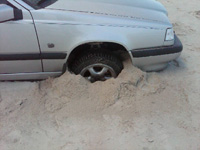 Orientation week was really great, we had so many shows and lots of activities to choose from. There were shows such as Survey Says, For Men Only, a Hypnotist, and a comedian to name a few. Activities were all across the board from BBQs, to pool parties, to “play fair.” It was really the most fun that I’ve had in a while. Unfortunately I was unable to make “play fair” because we took an unexpected tour of the beach. During which I drove off the path and got my car stuck in the sand. We waited an hour for beach patrol to come with the truck to pull us out. It was a lot of fun regardless, but I had definitely learned a lesson there.
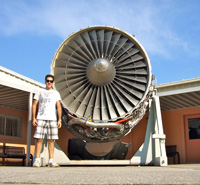 During my first week of classes I learned a lot about how to manage my time. I learned when and where to do my homework. It was the same back home, but I definitely need to take it more seriously now that I’m in college. While in college, each student is provided with a course schedule/syllabus which describes what will be covered each class and what homework is due for the next. This helps a great deal, especially when your professor verbally assigns homework and you’re not sure if you wrote down the correct task. Emailing and getting to know your professors is the key to success in college. You’ll get a better experience because your professors will get to know your learning abilities or disabilities and will work with you should any issues arise. College isn’t like high school, you are the person who needs to make the initial step of explaining to your professor if you’re not understanding something.
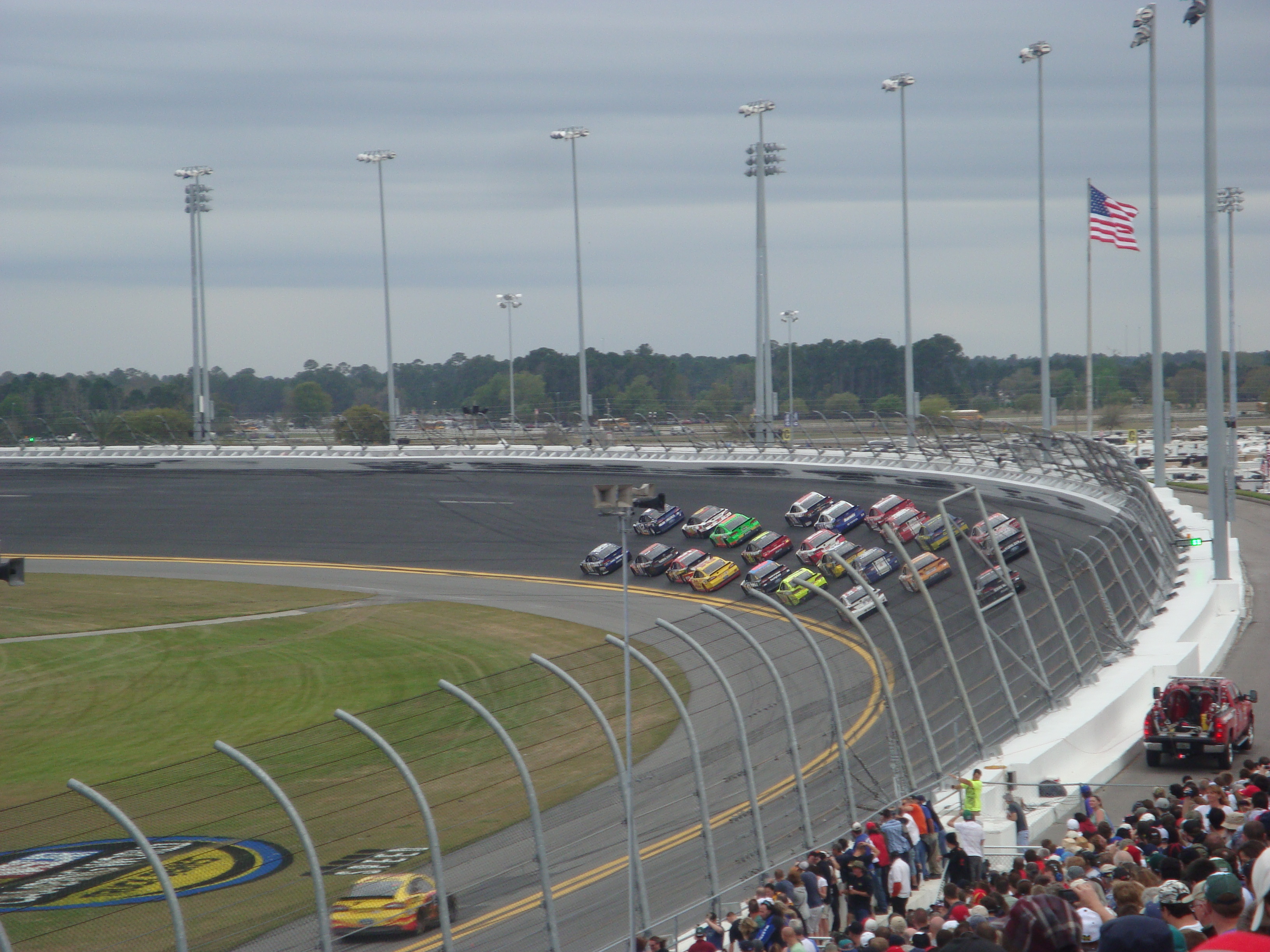
 Daytona Beach is definitely a great college town. Nearby are Stetson University, Daytona State College, UCF Daytona Campus, Keiser University and Bethune-Cookman College. The town is split into two main parts; Speedway and Beachside. Speedway is all shopping centers and chain restaurants and of course the NASCAR speedway. Beachside is where the beach hotels, thrift shops and clubs are located. Both parts of town are busy, however the beach is definitely the place to go on the weekends.